
Google's chief privacy officer, Keith Enright, has warned policymakers that frequent and large-scale sharing of citizen data, even if anonymized, can damage users' privacy. Pointing to research that shows data sets lose their anonymity if shared consistently over time, he said: "I would encourage policymakers and companies to be extremely circumspect while proceeding in that direction." Anonymization is a technique that removes or modifies personally identifiable information, resulting in data that cannot be associated with any one individual.

Game streaming is becoming a serious professional choice for youth, as it allows them to make good money.

Protesting staff demand that UIDAI upgrade its software with an option to verify the documents submitted by residents.
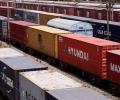
This alternative is being planned as the existing projects continue to be delayed due to land acquisition troubles. The ministry is thinking of adding new track lines to its existing eastern and western DFCs passing major areas in the proposed stretches, senior officials said.
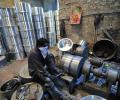
With the Covid-19 pandemic showing signs of ebbing and economic activity picking up, factory owners in Jalandhar had hoped that the worst was over. However, the heat wave in April and extensive power cuts that came with it, have crushed their hopes. The city's large number of micro, medium and small enterprises (MSMEs) are now gearing up for yet another struggle, this time to survive with the shortage of power that is severely impacting their operations.

The Indian Railways has decided to not cancel any more passenger trains to accommodate more freight traffic for coal transport. It will also gradually restore the ones it cancelled recently. The national transporter is of the view that coal supply is now reaching normative levels and does not need any more special measures. "Early data suggests that coal supply has stepped up since the passenger trains were cancelled.
Hit by Covid waves and slowdown, the Indian Railways has still not been able to return to its pre-pandemic passenger traffic, data by ministry of Railways has revealed. In February, the national transporter received 413 million ticket bookings - 43 per cent higher than the previous year, but only 61 per cent of the 675 million in February 2020. According to the statistics, that was the last time the Railways saw more than 500 million bookings in a single month.
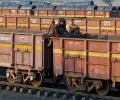
Amid rising demand for coal freight and an aggressive push towards diversifying its freight basket, Indian Railways is planning to buy 100,000 more wagons over the next three fiscal years. The procurement plan will majorly comprise BOXN wagons, which are used to transport coal, said a senior Ministry of Railways official. Notably, the railways recently floated a sizeable tender worth Rs 35,000 crore of wagons, which had been in the pipeline since 2018. "Our Budget Estimates for freight increase were conservative.
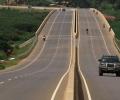
If 2019-20 (FY20) was an unusual year for highway construction in India, with the pace of work slowing down for the first time since the Narendra Modi government assumed power in 2014, largely due to the general elections in May and liquidity crunch, the outbreak of the Covid-19 pandemic in 2020-21 (FY21) only made matters worse with lockdowns and labour unavailability. The pace of highway construction in 2021-22 (FY22) has not been able to bulldoze the pandemic barriers in a year marred by two Covid-19 waves - the second at the start of the fiscal year, the third towards the close. With localised lockdowns and restrictions on mobility, highway construction growth in the country has now fallen to a five-year low.
 © 2026 Rediff.com - Advertise with us - Disclaimer - Privacy Policy - Sitemap - Feedback - About us - Terms of use - Grievances